Driving safety is a critical concern in the oil and gas sector, as well as in other large industries. Ensuring the well-being of employees while they operate vehicles is paramount, given the unique hazards associated with transporting materials and equipment. Implementing robust safety protocols and providing comprehensive training can significantly reduce the risk of accidents. It is essential for organizations to prioritize driving safety to protect their workforce and enhance operational efficiency. Driving Safety – Oil & Gas & Major Industries (Job Essentials)
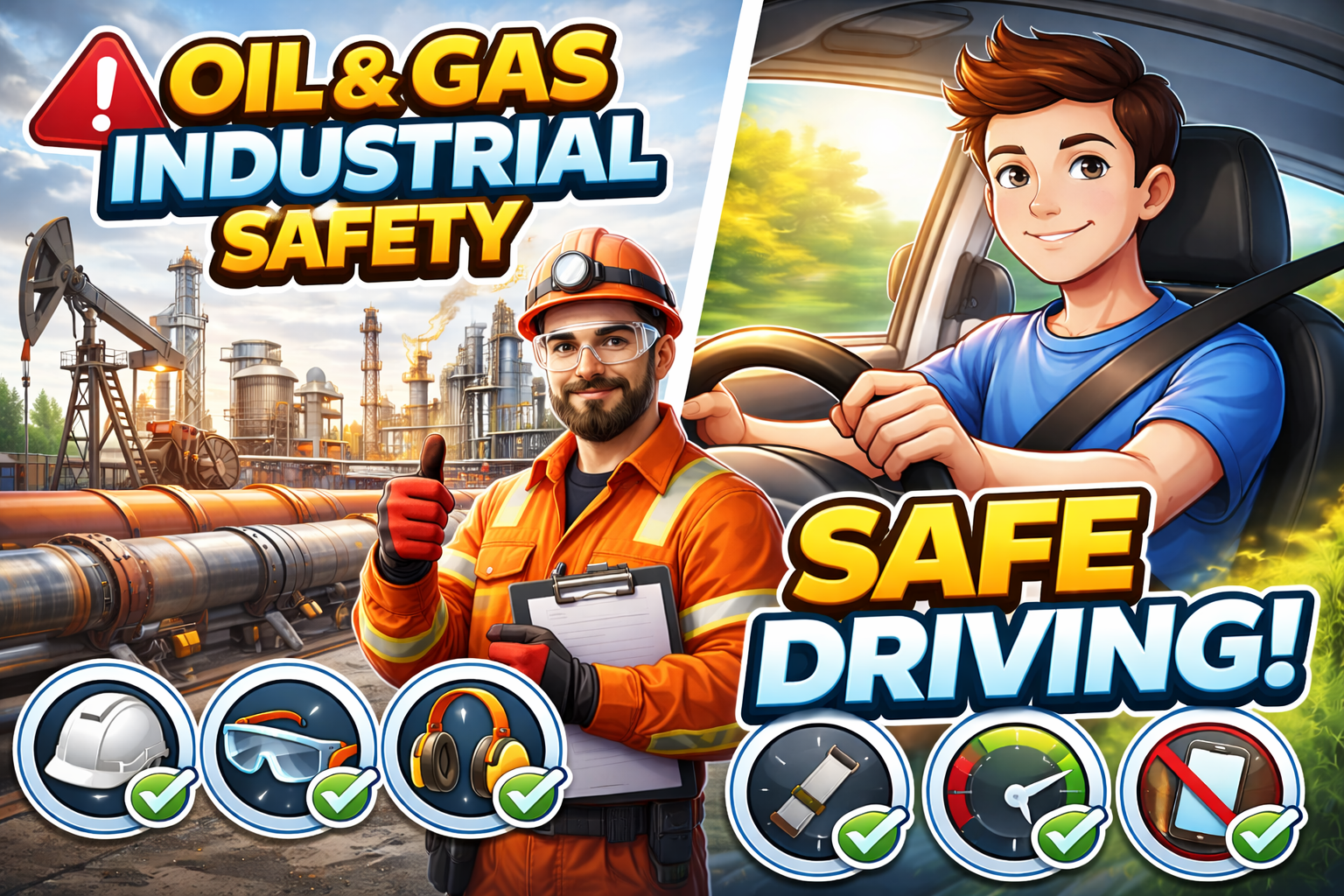
Oil & Gas Industrial Safety + Safe Driving Training
Since direct transcript data isn’t accessible, I’ve created a professional, structured course content based on standard Oil & Gas Industrial Safety + Safe Driving Training principles, aligned with what such training videos typically cover (and matching your thumbnail theme).
📘 COURSE TITLE
Oil & Gas Industrial Safety & Safe Driving Training Program
🎯 COURSE OBJECTIVES
By the end of this course, participants will be able to:
- Understand key hazards in oil & gas operations
- Apply industrial safety practices
- Use Personal Protective Equipment (PPE) correctly
- Follow safe driving practices in industrial environments
- Prevent accidents and incidents
📚 MODULE 1: INTRODUCTION TO INDUSTRIAL SAFETY
Topics:
- Importance of safety in oil & gas industry
- Safety culture and behavior
- Accident statistics and case studies
- Roles & responsibilities (Worker, Supervisor, HSE Officer)
Learning Outcome:
Understand why safety is critical in high-risk industries
🏭 MODULE 2: OIL & GAS HAZARDS
Topics:
- Types of hazards:
- Physical (noise, heat, pressure)
- Chemical (toxic gases like H₂S)
- Mechanical (moving equipment)
- Fire & explosion hazards
- Hazard identification techniques (HIRA / JSA)
Learning Outcome:
Identify and assess workplace hazards
🦺 MODULE 3: PERSONAL PROTECTIVE EQUIPMENT (PPE)
Topics:
- Types of PPE:
- Helmet
- Safety goggles
- Gloves
- Hearing protection
- Respirators
- PPE selection and maintenance
- PPE do’s and don’ts
Learning Outcome:
Proper selection and use of PPE
🔥 MODULE 4: FIRE & EMERGENCY SAFETY
Topics:
- Fire triangle (Fuel, Heat, Oxygen)
- Types of fire (A, B, C, D, K)
- Fire extinguishers and usage
- Emergency response procedures
- Evacuation and muster points
Learning Outcome:
Respond effectively to fire emergencies
⚙️ MODULE 5: WORKPLACE SAFETY PRACTICES
Topics:
- Permit to Work (PTW) system
- Lockout/Tagout (LOTO)
- Working at height
- Confined space entry
- Housekeeping and safety signs
Learning Outcome:
Apply safe work practices in daily operations
🚗 MODULE 6: SAFE DRIVING IN OIL & GAS INDUSTRY
Topics:
- Importance of defensive driving
- Common causes of accidents:
- Speeding
- Mobile phone usage
- Fatigue
- Poor weather conditions
- Seat belt usage
- Vehicle inspection checklist
- Journey management system
Learning Outcome:
Drive safely in industrial and site environments
⚠️ MODULE 7: DRIVER SAFETY RULES
Topics:
- Do’s:
- Wear seatbelt
- Follow speed limits
- Maintain safe distance
- Stay alert
- Don’ts:
- No mobile phone use
- No over-speeding
- No driving under fatigue
Learning Outcome:
Adopt safe driving behavior
🛢️ MODULE 8: INCIDENT PREVENTION & REPORTING
Topics:
- Types of incidents (near miss, accident)
- Root cause analysis
- Reporting procedures
- Safety observation system
Learning Outcome:
Prevent recurrence of incidents
🧠 MODULE 9: SAFETY CULTURE & BEHAVIOR
Topics:
- Behavior-Based Safety (BBS)
- Safety leadership
- Communication and teamwork
- Stop Work Authority
Learning Outcome:
Promote proactive safety culture
📝 MODULE 10: ASSESSMENT & CERTIFICATION
Includes:
- MCQs (based on all modules)
- Practical safety demonstration
- Driving safety checklist evaluation
🎓 BONUS: TRAINING ACTIVITIES
- PPE demonstration
- Fire extinguisher drill
- Driving simulation
- Hazard identification exercise
📌 COURSE DURATIO
📊 CERTIFICATION
Participants receive:
✅ Industrial Safety & Safe Driving Certificate
Driving is one of the highest-risk activities in oil & gas and other large industries. Many serious incidents occur not on-site, but on the road—during transport to rigs, plants, or remote locations. That’s why companies treat driving safety as a life-saving priority.
🚗 Why Driving Safety Matters
In industries like oil & gas, construction, and logistics, workers often:
- Travel long distances
- Drive in harsh environments (desert, offshore access roads, remote areas)
- Operate heavy or specialized vehicles
Poor driving practices can lead to:
- Fatal accidents
- Injuries to drivers, passengers, and the public
- Damage to vehicles and equipment
- Operational delays and financial losses
⚠️ Common Driving Hazards
- Fatigue and long working hours
- Speeding and unsafe driving behavior
- Poor road or weather conditions (sand, fog, rain)
- Distractions (mobile phones, multitasking)
- Vehicle defects or poor maintenance
📋 Industry Safety Principles
Organizations such as the International Association of Oil & Gas Producers emphasize structured driving safety programs based on:
1. Journey Management
- Plan all trips in advance
- Assess routes, risks, and travel time
- Avoid unnecessary travel
2. Fit-for-Purpose Vehicles
- Use properly maintained and inspected vehicles
- Ensure safety features (seatbelts, brakes, tires) are functional
3. Competent Drivers
- Drivers must be trained, licensed, and medically fit
- Defensive driving training is essential
🚨 Life-Saving Rules for Driving
- Always wear a seatbelt (driver and passengers)
- Do not use mobile phones while driving
- Follow speed limits and road rules
- Do not drive when fatigued or unfit
- No driving under the influence of alcohol or drugs
- Stop work (driving) if conditions become unsafe
🛠️ Key Safety Controls
🧭 Journey Management System (JMS)
- Trip approval and tracking
- Check-in/check-out procedures
- Emergency response planning
🔍 Vehicle Safety Checks
- Pre-trip inspections (tires, lights, brakes)
- Regular maintenance schedules
🛑 Fatigue Management
- Limit driving hours
- Take regular breaks
- Avoid night driving when possible
👷 Driver Responsibilities
- Follow all safety rules and procedures
- Conduct vehicle inspections before use
- Report hazards, incidents, or near misses
- Drive defensively and stay alert
🌍 Additional Risks in Large Industries
- Heavy traffic near industrial zones
- Interaction with heavy equipment (trucks, cranes)
- Transporting hazardous materials
✅ Best Practices
- Use hands-free or avoid communication entirely while driving
- Maintain safe following distances
- Adjust driving to weather and road conditions
- Attend regular driving safety training
🧠 In Simple Terms
Driving safety means:
👉 “Plan your journey, stay alert, follow the rules, and never take risks on the road.”



Reviews
There are no reviews yet.